
LUDUS・PvP Merge Battle Game
TOP APP GAMES LTDStrategy
4.43.34K Reviews
- Version
- 1.35.6
- Installs
- 5.00M
- Age Rating
- Everyone 10+
Screenshots

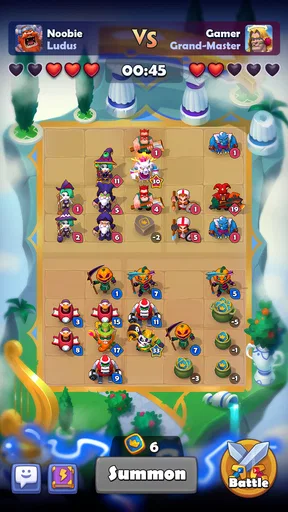






Our Review of LUDUS・PvP Merge Battle Game
 Analysis by Appyee
I like mobile strategy games best when a match gives me a real decision to make without demanding a long session, and that is the appeal I find in LUDUS. It is a strategy game built around direct player-versus-player battles, where preparation matters but an opponent can disrupt a comfortable plan. That mix makes it easy to try a quick duel and still gives me something to think about afterward.
My main advice is to approach it as a game of repeated small adjustments rather than a puzzle with one perfect team. A lineup that works well in one encounter may struggle against a different opponent, so I get more out of each match when I pay attention to what happened and change one thing at a time. The useful skill is learning from a loss instead of treating every result as a verdict on the whole team.
A practical rhythm for fitting matches into a day
A realistic way to play is to open the game during a short break, make a few deliberate PvP attempts, then stop while there is still time to consider the results. Because battles are against other players, I would not start one when I need to put my phone down immediately. A match asks for attention, and interruptions can make it harder to judge whether a tactical choice worked or whether I simply lost track of the moment.
After a battle, I find it more useful to identify one cause of the outcome than to rebuild everything. Did my arrangement leave an important unit exposed? Did I commit to an ability too early? Was the opponent’s approach simply a poor matchup for mine? That brief review creates a repeatable habit: observe, adjust, and test. It is more manageable than chasing a complete overhaul after every defeat.
Settings and spending decisions worth checking
Before settling into regular play, I would check the game’s available settings on the device and make sure its presentation is comfortable for the way I play. Clear visuals and audible battle cues can help me follow what is happening, but the right balance depends on whether I am playing somewhere quiet or in a noisy place. I would avoid assuming that a particular control option exists; the sensible approach is to use only the choices actually shown in the game and keep the setup consistent while learning.
The game is free to start, with optional purchases priced from $0.49 to $119.99 per item. That is a broad range, so I would decide in advance whether I am playing without spending or setting a strict limit. Paid shortcuts can be tempting when progress feels slow, but buying something does not automatically solve a strategic weakness. I would first ask whether I enjoy the core battles enough to keep playing, then consider a purchase only if it fits my budget and genuinely improves my experience.
How its PvP focus compares with other strategy games
Compared with strategy games centered on long campaigns, map control, or extended planning, this one puts the appeal in short, direct contests against another player. That makes it a better fit when I want an immediate test of team choices than when I want a sprawling solo story or a quiet puzzle I can pause at any moment. It also differs from purely AI-driven battles: a human opponent can make the same setup feel less predictable from one match to the next.
The trade-off is that competitive play can feel uneven. The original review’s experience of sometimes meeting stronger teams is worth keeping in mind: a loss may reflect a gap in team strength as well as a decision made during the battle. If that kind of matchup frustrates you, a slower single-player strategy game may be more relaxing. If you enjoy adapting under pressure, the uncertainty is part of the point.
Who will enjoy it, and who may prefer something else
I would recommend it to players who like tactical experimentation, short competitive sessions, and the feeling of gradually improving a team. It can also suit someone who enjoys a familiar routine: play a duel, note one lesson, make a measured change, and try again later. The real-time PvP focus gives those small experiments a human opponent to test them against.
I would be more cautious about recommending it to anyone who dislikes competitive losses, wants every encounter to be evenly matched, or prefers strategy that can be paused and considered at leisure. It is also not my first choice for someone looking for a story-led adventure or a game where progress never involves pressure to spend. Free-to-play purchases are optional, but the presence of paid ways to speed progress may be distracting if you would rather not think about monetization at all.
Building a repeatable way to play
I use this section to focus on the small routine that makes repeated PvP matches more useful: enter with one plan, notice what the opponent changes, and carry just one lesson into the next duel. That keeps experimentation manageable rather than turning every result into a reason to rebuild everything. From there, I look at which setup choices are worth checking before a regular play session.
First Impressions
Jumping into LUDUS for the first time felt like stepping into a strategic playground. The game opens up with a sleek interface that’s both inviting and easy to navigate. It doesn’t bombard you with too many options right off the bat, which is a relief. Instead, it eases you into the core mechanics, making sure you’re ready for the battles ahead.
Visually, the game is a treat. The graphics are sharp, with vibrant colors and well-designed characters that keep your eyes glued to the screen. The soundtracks and sound effects hit the right notes, enhancing the overall immersive experience.
Gameplay Mechanics
Alright, let’s talk about the meat of the game - the gameplay itself. At its heart, LUDUS is all about strategic planning and tactical execution. You’re tasked with assembling a team of heroes, each with unique abilities and skills, to take on opponents in real-time battles.
The controls are intuitive, making it easy to move your units around the battlefield and unleash their special abilities. What’s cool is how the game encourages you to think on your feet. Each battle feels like a chess match, where anticipating your opponent’s moves and countering them is the key to victory.
There’s a progression system in place that lets you upgrade your heroes and unlock new abilities as you advance. This keeps things fresh and gives you something to strive for, ensuring you’re always strategizing for the next big upgrade.
Community and PvP Experience
One of the standout features of LUDUS is its vibrant community. The game’s PvP mode is where all the action happens. Facing off against real players adds a layer of unpredictability and excitement that’s hard to replicate in AI battles.
The matchmaking system is generally smooth, though there are moments when you might face off against players with significantly stronger teams. But hey, that’s part of the fun, and it pushes you to improve your strategy and team composition.
The game also includes various events and challenges that keep the community engaged. Participating in these can earn you some sweet rewards, making it worth your while to check in regularly.
Monetization and In-Game Purchases
Let’s talk shop. Like many free-to-play games, LUDUS offers in-game purchases. You can buy currency to speed up progress or unlock certain heroes faster. The good news is that the game is pretty generous with its rewards, so you’re not forced to spend money to enjoy the game.
That said, if you’re the impatient type, you might find yourself tempted to make a purchase here and there. Just keep an eye on your spending, and you’ll be golden.
Final Thoughts
All in all, LUDUS is a solid entry into the strategy game genre. It combines engaging tactical gameplay with a lively PvP community, creating an experience that’s hard to put down. Whether you’re a seasoned strategist or new to the genre, there’s something here for everyone.
If you’re ready to test your tactical prowess and dive into some intense PvP battles, give LUDUS a shot. It might just become your next mobile gaming obsession. And hey, when you do, let me know what you think!
What to expect before installing
TOP APP GAMES LTD develops the game, which has a 4.5 average from around 217,000 ratings and more than 5 million installs. It is rated Everyone 10+, and the current version is 1.29.5; Android users need version 7.0 or later. Those details make it look accessible to a broad audience, though the competitive nature is still worth considering for younger players and families choosing what belongs on a device.
For me, the clearest way to judge whether it suits you is to try the free experience as a strategy game, not as a promise of effortless wins. The short-session appeal and the chance to refine a team are its strongest reasons to stay. If you enjoy experimenting against real opponents and can shrug off an occasional mismatch, I think it is worth a look. If you want calm, fully predictable progress, I would choose a different kind of strategy game.
Verdict
Strengths of LUDUS・PvP Merge Battle Game
- Engaging turn-based strategy battles.
- Vibrant graphics and detailed character design.
- Regular updates with new content.
- Intuitive controls for easy gameplay.
- Strong community and competitive PvP.
Limitations of LUDUS・PvP Merge Battle Game
- In-app purchases can be expensive.
- Requires a stable internet connection.
- Some levels can be repetitive.
- Occasional server lag issues.
- Limited offline play options.
Similar Picks in This Category
View All
Clash of Clans
Supercell4.5

Plants vs. Zombies™
ELECTRONIC ARTS3.7

Lords Mobile: Kingdom Wars
IGG.COM4.5

Clash Royale
Supercell4.4

State.io — Conquer the World
CASUAL AZUR GAMES4.1

Car Driving School : Car Games
Spark Game Studios3.9
Frequently Asked Questions
What is LUDUS and how does it differ from other strategy games?
LUDUS is a strategy PvP battle game that emphasizes tactical thinking and competitive online play. Unlike typical strategy games, LUDUS offers a unique blend of real-time combat and turn-based strategy, allowing players to engage in dynamic battles. It focuses heavily on player-versus-player interactions, requiring strategic planning and quick decision-making to outsmart opponents.
What are the system requirements for LUDUS on Android and iOS?
To enjoy LUDUS smoothly, Android users should have at least version 7.0 (Nougat) or later, with a minimum of 2GB RAM. For iOS users, the game requires iOS 11.0 or later and is compatible with iPhone, iPad, and iPod touch. Having a stable internet connection is crucial for seamless PvP experiences.
Is LUDUS free to play, and are there any in-app purchases?
LUDUS is free to download and play, offering a variety of in-game purchases to enhance the experience. These purchases range from cosmetic upgrades to strategic advantages, such as additional characters or power-ups. While optional, these purchases can provide players with a competitive edge in battles.
How does matchmaking work in LUDUS, and is it fair for new players?
LUDUS uses a sophisticated matchmaking system designed to pair players with similar skill levels. This ensures fair and balanced matches, allowing newcomers to compete against others of equivalent experience. The system continuously adjusts as players improve, maintaining a challenging yet fair gaming environment.
Are there any social features in LUDUS to enhance the multiplayer experience?
Yes, LUDUS includes a range of social features to enhance interaction among players. These include friend lists, in-game chat, and the ability to form or join clans. These elements not only foster a sense of community but also provide strategic advantages, as players can collaborate and share tactics with clan members.
Play our best games!


